

Innovation is the driving force behind growth, success, and transformation in any business or organization. While ideas are abundant, turning them into impactful solutions requires strategy, creativity, and an environment that nurtures experimentation.
In this guide, we’ll explore how to foster innovation—from generating ideas to implementing them successfully.
Understanding Innovation
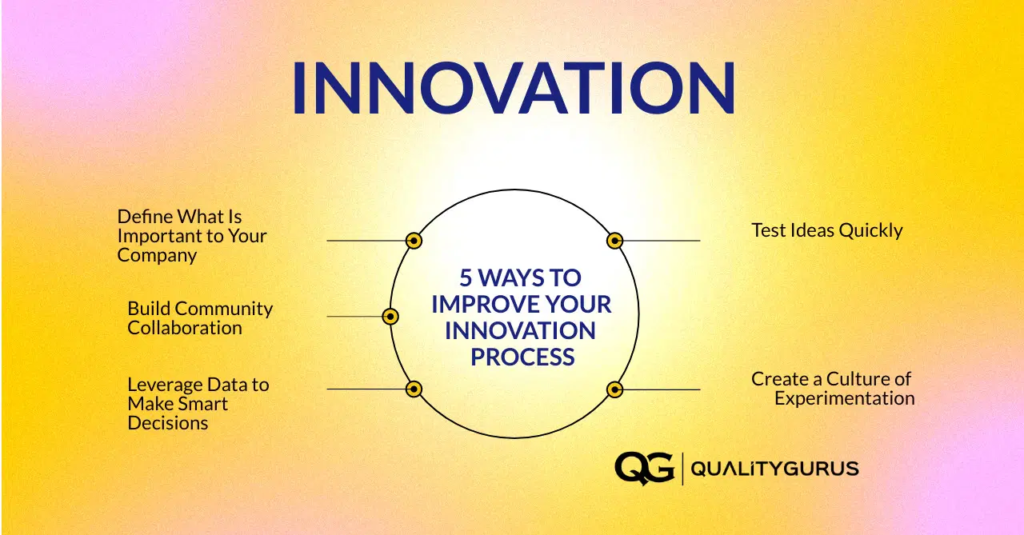
Innovation is more than creating something new—it’s about finding better ways to solve problems, meet customer needs, and create value. It can be incremental, such as improving an existing process, or disruptive, like developing a completely new product that changes the market.
Companies that prioritize innovation gain a competitive edge, improve efficiency, and adapt better to changing market demands.
Creating a Culture of Innovation
A strong culture is essential for fostering innovation. Here’s how organizations can cultivate it:
- Encourage Experimentation: Allow employees to test new ideas without fear of failure. Mistakes are often the stepping stones to breakthroughs.
- Promote Collaboration: Diverse teams bring different perspectives, which often lead to more creative solutions.
- Reward Creativity: Recognize and reward employees for innovative thinking and problem-solving.
- Open Communication: Encourage transparent sharing of ideas across all levels of the organization.
Turning Ideas into Action

Generating ideas is only the first step. To make an impact, businesses need to implement them effectively:
- Identify Opportunities: Analyze market trends, customer needs, and internal processes to spot areas for improvement.
- Validate Ideas: Test concepts on a small scale to ensure feasibility before full-scale implementation.
- Plan Execution: Develop a roadmap with clear objectives, resources, and timelines.
- Measure Impact: Track results to evaluate success and learn from the process.
The Role of Leadership in Innovation
Leaders play a crucial role in driving innovation. They set the vision, provide resources, and inspire teams to think creatively. Effective leaders also remove barriers, encourage risk-taking, and model innovative behavior themselves.
Leadership that fosters autonomy and trust empowers employees to contribute ideas and take ownership of projects, leading to meaningful impact.
Embracing Technology and Tools
Technology can accelerate innovation by providing tools for research, collaboration, and implementation. AI, data analytics, and cloud platforms, for example, help businesses analyze trends, predict customer behavior, and test new concepts efficiently.
Using the right technology allows companies to transform ideas into actionable solutions faster and more accurately.
Overcoming Challenges in Innovation
Innovation is not without challenges. Common obstacles include:
- Resistance to change
- Limited resources
- Fear of failure
- Lack of clear strategy
Overcoming these challenges requires persistence, effective planning, and a mindset that views obstacles as opportunities for growth.
Conclusion
Innovation transforms ideas into impact when supported by the right culture, leadership, and execution. By encouraging creativity, validating ideas, and leveraging technology, organizations can foster meaningful innovation that drives growth and long-term success.
Frequently Asked Questions (FAQs)
1. What is innovation in business?
Innovation is the process of creating new or improved products, services, or processes that add value to a business or customer.nnovation in business refers to the process of developing new ideas, products, services, processes, or business models that create value for customers and improve the company’s performance. It’s not just about inventing something entirely new; it can also involve improving existing offerings, adopting new technologies, or finding more efficient ways to operate.
In essence, business innovation helps companies stay competitive, meet changing customer needs, and drive growth. Companies that continuously innovate are often better positioned to adapt to market trends, increase profitability, and differentiate themselves from competitors.
If you want, I can expand this into a full blog post titled “What is Innovation in Business and Why It Matters” with examples, strategies, and trends for 2026. Do you want me to do that?
2. How can companies encourage innovation?
By fostering a culture of experimentation, collaboration, open communication, and recognizing creative contributions.
3. What role does leadership play in innovation?
Leaders provide vision, resources, and support, while inspiring teams to think creatively and take calculated risks.
4. How can technology help innovation?
Tools like AI, analytics, and collaboration platforms help test ideas, analyze trends, and implement solutions faster.
5. What are common challenges in innovation?
Resistance to change, limited resources, fear of failure, and lack of strategy are typical obstacles that need to be addressed.
If you want, I can also create an SEO-optimized version with keywords, meta description, and headings to make this blog rank higher on Google.
Do you want me to do that?